
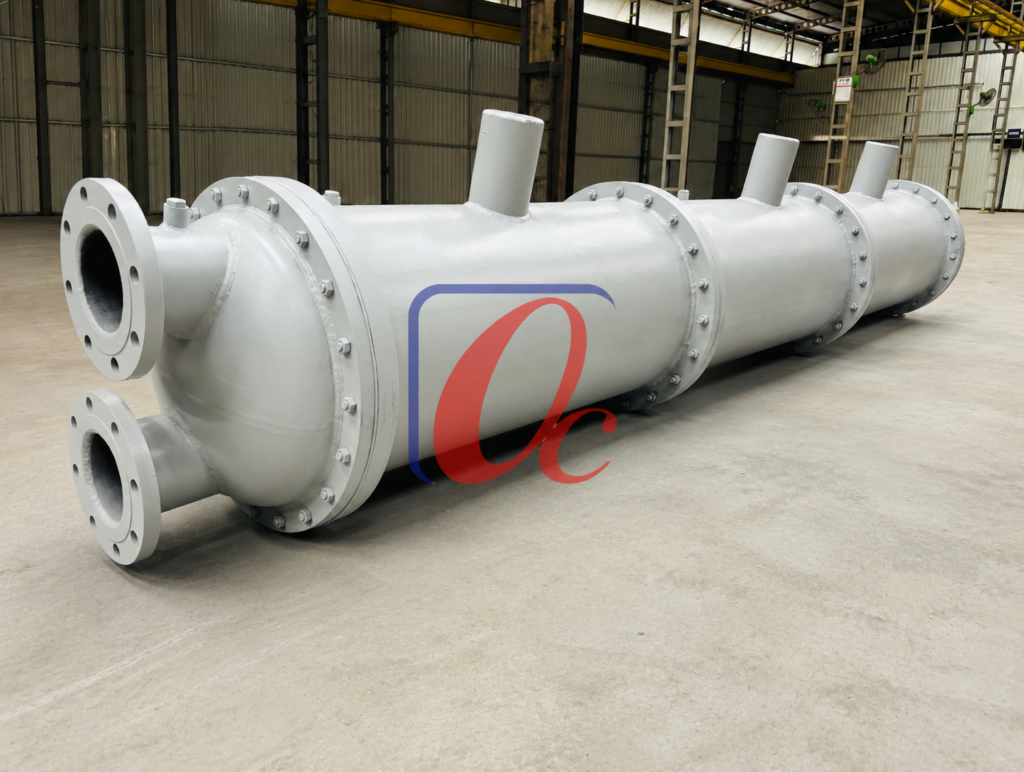
In serious industry, buying a heat exchanger is not just a purchase decision. It is an operational decision.
The wrong unit can lead to reduced efficiency, pressure issues, leakage risk, unnecessary maintenance, energy loss, and expensive downtime. The right unit, however, improves thermal performance, supports production continuity, and delivers long-term reliability.
That is why selecting the right partner and the right equipment matters.If you are evaluating options from a shell and tube heat exchanger manufacturer, this guide will help you make a technically sound decision.
Why Shell & Tube Heat Exchangers Remain an Industry Standard
A Shell & Tube Heat Exchanger is trusted across industries because of its proven ability to handle:
- High pressure applications
- High temperature duties
- Dirty process fluids
- Heavy industrial environments
- Continuous operations
- Custom engineered requirements
This is why sectors such as chemical processing, oil & gas, pharmaceuticals, steel, utilities, food processing, and power generation continue to rely on shell and tube systems.
1. Start with the Real Application, Not the Product Catalogue
Many buyers begin by asking for price first.
Experienced engineers begin with duty conditions first.
Before selecting a unit, define:
- What fluid is being cooled or heated?
- What is the flow rate?
- What is inlet temperature?
- What is required outlet temperature?
- What is allowable pressure drop?
- What is operating pressure?
- Is the fluid corrosive?
- Is space limited?
- Is this new project or replacement?
A serious industrial heat exchanger manufacturer will ask these questions before giving a proposal.
Because real engineering starts with data.
2. Understand the Difference Between Standard and Custom Units
Not every application fits a standard model.
Many plants operate under unique load conditions, old piping layouts, imported equipment dimensions, shutdown constraints, or special material needs.
That is where a custom shell and tube heat exchanger becomes valuable.
Custom-built units help with:
- Better fitment
- Better thermal performance
- Easier replacement integration
- Improved lifecycle value
- Lower modification cost during installation
If your application is critical, custom engineering often saves more than it costs.
3. Choose the Right Material of Construction
Material selection directly affects durability, compatibility, and lifecycle cost.
Common options include:
Carbon Steel
Good for general industrial use where corrosion is limited.
Stainless Steel
Preferred for hygienic, corrosive, or moisture-prone environments.
Copper
Excellent thermal conductivity for selected cooling duties.
Cupronickel
Useful for marine or aggressive water conditions.
Brass
Used in specific thermal transfer applications.
A qualified shell and tube heat exchanger supplier will recommend materials based on actual fluid chemistry and operating environment.
4. Pay Attention to Thermal Efficiency
The external size of a heat exchanger does not guarantee performance.
What matters is internal engineering:
- Tube diameter
- Tube length
- Tube count
- Pass arrangement
- Baffle design
- Surface area
- Flow velocity
- Fouling allowance
Two exchangers may look similar externally but perform very differently internally.This is why selecting a real process heat exchanger manufacturer matters more than comparing only dimensions.
5. Consider Maintenance Accessibility
Many buyers focus only on purchase cost.
Smart buyers think about serviceability.
Ask:
- Can tube bundles be cleaned easily?
- Can tube bundles be replaced?
- Is maintenance access practical?
- Are spare parts manageable?
- Is shutdown servicing easier?
Long-term maintenance practicality has major operational value.
6. If It Is a Replacement, Reverse Engineering Matters
Replacement projects are common in mature plants.
Often the OEM only gives:
- Old part number
- Limited drawings
- No thermal data
- Long import lead times
In such cases, a capable replacement heat exchanger India supplier should be able to inspect dimensions, understand process duty, and engineer a suitable replacement.
This reduces waiting time and restores continuity faster.
7. Delivery Reliability Matters More Than Many Buyers Realize
For shutdown replacements, delivery delay can become more expensive than the equipment itself.
Lost production, contractor idle time, extended shutdown, and management pressure all carry cost.
That is why serious plants prefer a shell and tube heat exchanger manufacturer known for dependable execution, not only low quotations.
8. Evaluate the Manufacturer, Not Just the Product
Before finalizing, assess the supplier’s capability:
- In-house engineering team
- Manufacturing infrastructure
- Welding quality discipline
- Testing capabilities
- Inspection systems
- Documentation support
- Response speed
- Industry references
A serious manufacturer creates confidence before dispatch.
9. Industries That Commonly Use Shell & Tube Heat Exchangers
These systems are widely used in:
- Chemical plants
- Pharmaceutical plants
- Oil & gas facilities
- Steel plants
- Power generation
- HVAC utilities
- Food processing
- Marine systems
- Industrial manufacturing
This wide adoption exists because shell and tube exchangers are versatile, dependable, and scalable.
Why Serious Buyers Choose Omeel Coils
Omeel Coils supports industrial buyers with engineered Shell & Tube Heat Exchangers built around actual operating conditions.
Our strength includes:
- Application-based design approach
- Custom manufacturing capability
- Material flexibility
- Quality-led production systems
- Replacement readiness support
- Dependable delivery mindset
- Long-term industrial trust
When operations are critical, buyers need more than supply. They need engineering confidence.
Final Thoughts
Choosing the right Shell & Tube Heat Exchanger is not about selecting a metal vessel.
It is about selecting thermal reliability, production continuity, and operational confidence.
If your requirement is serious, choose a manufacturer that understands your process before quoting your product.
That difference matters.